The problem
I have a day job, a 100 km trail race to train for and a newsletter I want to write. Each one lives in its own app: tasks in Todoist, notes in Capacities, workouts in intervals.icu. And I kept doing the same kind of work, in the same format, over and over.
Claude skills helped with one task at a time. But a skill can’t hand a task to someone else, report back on it, or show me where everything stands.
Then there’s me. In my review of 2025 I wrote down the habit I want to drop: jumping between too many topics instead of finishing one. So the question for this experiment was simple: could something hold the threads while I picked one?
Where I started
I started small, with a proof of concept from a YouTube tutorial: one to-do agent and one dashboard. It sorted my tasks into three piles: things an agent can do, things we do together, and things only I can do.
The first runs taught me more than the build did. A checker agent failed a draft message for “unsourced facts” that came straight from my own notes. Another task stalled because the Figma file it needed wasn’t linked anywhere. Both times the model was fine. I just hadn’t given it what it needed.
Thinking of it as an office
What helped was a picture: an office. One executive assistant I talk to, and departments behind it for my to-do list, running, writing and lessons. Each department has its own folder, its own rules and its own memory. Six worker agents do the actual jobs, each with one task and one output.
So an article can’t skip from idea to draft: a small script refuses the move, instead of me asking the model nicely. And nothing leaves the house on its own. The agents never send, book, buy or post. They draft, and anything that matters lands on my dashboard as one card: what changes, why, and the exact change. I press Apply or Dismiss.
Building it without writing code
I didn’t write a single line of code. Claude Code wrote all of it, in plain files I can read: a page of rules per department, a small memory, and little scripts for the checks a model shouldn’t have to think about. My part was the design: who does what, what needs my yes, and the link to my second brain in Capacities, so the agents work from my own standards and values.
Trying things this way is quick. The first three phases went from plan to tested in one day, each with a written “done when”.
What I’ve noticed so far
- The missing piece is usually context. Most failed runs had a capable model and a missing link, file or fact.
- A script is a stricter reviewer than I am. My first article was sent back twice before I even read it: once by a bug in the script, once for quotes without a source. It still misses numbers written out in words, so it isn’t perfect, but I know where to look.
- My edits teach it the most. When I banned a word, it went into memory with my reason, and the check now catches it in every draft.
From an assistant to an office
A week in, the first setup hit a limit. Each worker did one job, handed back one file and stopped. Nobody remembered yesterday, and nobody could pass work to a colleague. Fine for a to-do list, not for design work, where a screen passes through several hands.
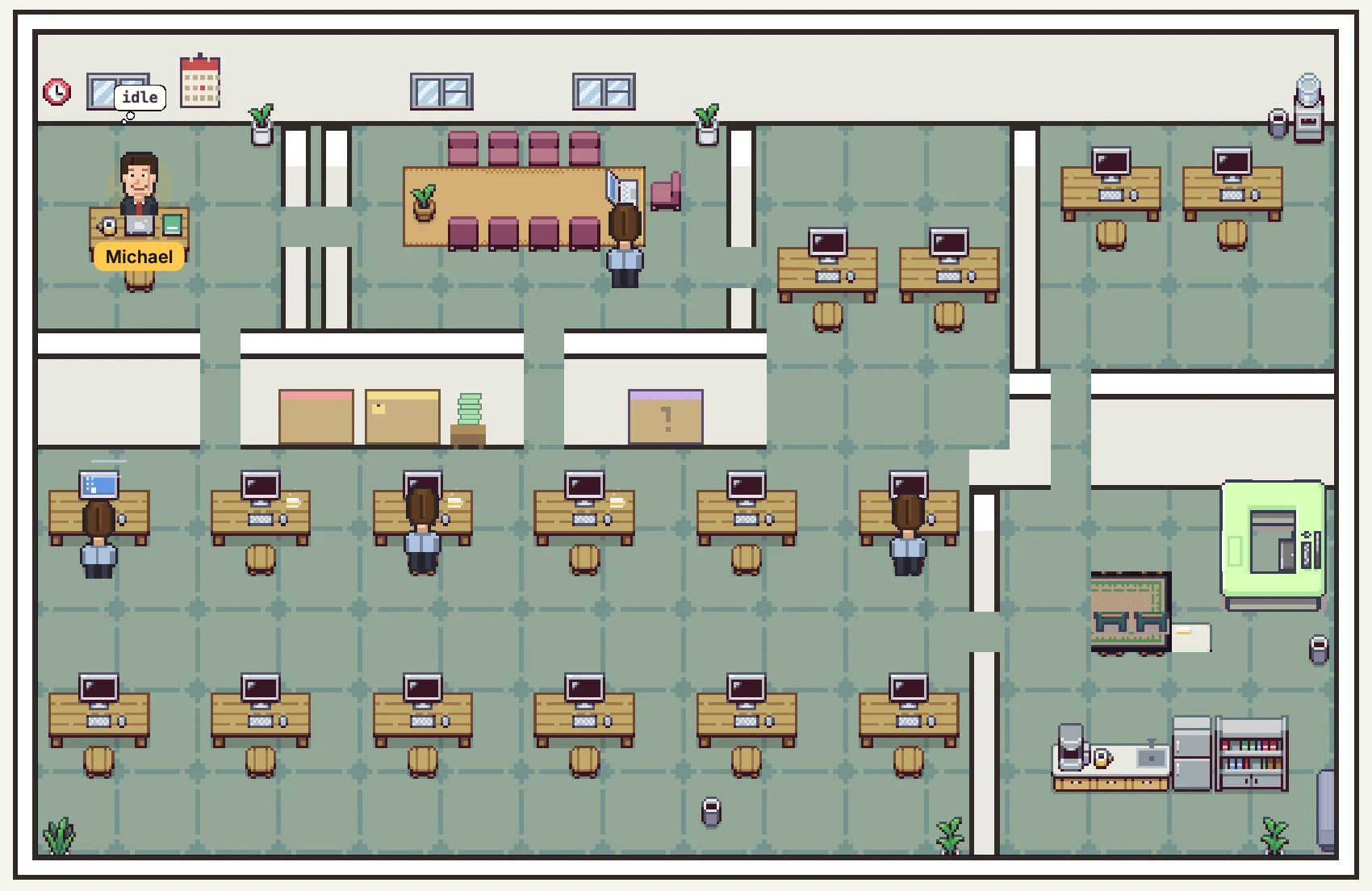
So on 27 November I moved the office into Munder Difflin, an open-source app on GitHub that runs a team of Claude agents in one place. It has five desks: a manager who sorts requests and only asks me about the important calls, an executive assistant, a product designer, a user researcher and a design system keeper. Each keeps its own memory, its own hand-off notes and its own copy of the files.
Now they talk to each other, in short messages: a request, a question, a proposal, a done. On the first day they sent each other 51 messages and finished seven tasks. I’ll admit it’s also just fun to watch. The rule from the start came along unchanged: draft first, and ask me before anything leaves this computer.
One example: a few lines about Mand
I jotted some design thoughts for Mand, my meal-prep app, into a to-do. The product designer picked it up and came back with wireframes, researched and benchmarked against real apps through the Mobbin MCP, and made with WCAG 2.2 in mind. I reviewed them, it did another round, and then it handed the result to the design system keeper, who checked that the design system was respected and, where it wasn’t, listed the next steps.
From a few loose lines to reviewed wireframes, I only stepped in to review. That saved me hours.
Where it is now
There’s one office, and my to-do list runs through it too. It reviews my Todoist inbox. When a task can be automated, it becomes a ticket: first for the product designer, then for the design system keeper, with a status message from each desk as it moves. I see every hand-off in one overview, and nothing goes out without my yes.
It’s still an experiment, not a finished product. This case leaves out the running coach’s training advice and what the office did for my day job. Got a part of your week you’d hand to an assistant, if you could trust what it sends? Tell me which one.